Recent Posts
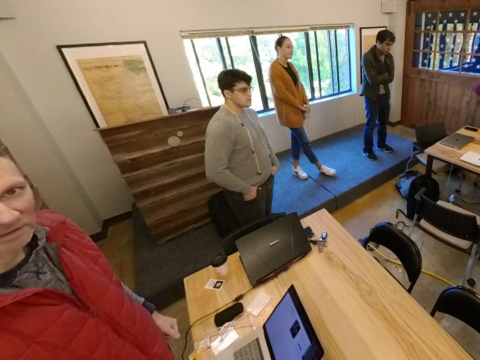
10/21/23 Code & Coffee @Viget
I enjoyed meeting so many wonderful people at Code&Coffee Viget. You guys are amazing! I’m looking forward to seeing you again soon. 😊
Huge thanks to Viget, Brian Williams, Jen Pengelly and Ben Morris for being awesome hosts!

How to Run (go)Harbor Docker Registry with Notary Behind Nginx Reverse Proxy
That’s a heck of very specific title for a post, don’t you think? At the same I think that would be the most desirable configuration for running a private Docker reporsitory on prem, don’t you think? And for some ridiculous reason, there is virtually no information in the Internet about…

How to Use Cloudflare As DDNS Service
You probably found this post while looking for a way to use Cloudflare as a DDNS provider, so you already know what DDNS is (in this case, scroll down). But if, by any chance you don’t know what it is and what Cloudflare is, here it goes…
Imagine that you are…

How to Push Your Code to GitHub Using Personal Access Token (PAT)
Imagine the frustration when you edited your code hosted on GitHub as usual, did “git commit” as usual, did “git push” as usual, and instead of usual output you see something like
remote: Support for password authentication was removed on August 13, 2021. Please use a personal access token instead.
remote: Please…
How to Run Gitlab Docker Container on Alternative Port (And Fix SSH Clone)
I’ve been fighting with a GitLab CE install lately and oh, my, how weird and nontrivial it appeared to be. For instance, to configure email I had to keep editing the config file (since there is no web interface to configure it), triggering email sending, watching the logs until it…

How to Actually Backup Google Drive’s .gdoc, .gsheet and .gslides Files
Love it or hate it, but Google Drive/Docs are two very popular products used by tons of businesses. There is a lot to like (collaborative editing, access from everywhere, to name my two favorite features), but there is one thing I really hate about Google Drive: it doesn’t make it…

New List of the Best Free 360-degree Panorama Plugins for WordPress
With the new version v1.1.0 of 360 View being published yesterday, I just wanted to explain why did I create that plugin. And what could be a better explanation than listing all the competitors? :)
So here we go, the complete list of other 360-degree WordPress plugins I tried to…

I Just Released 360 View v1.1.0
If you are a fan of 360-degree photography and looking for a way to add your 360-degree images or video to your blog, then you may like 360 View – a WordPress plugin allowing you to add the media to your posts and pages, label it, add automatic panning/orbiting, adjust…

How to Fix QNAP Security and Performance Issues
QNAP is a very ok NAS (see https://www.qnap.com/en-us/product/series/home for details about what’s QNAP and NAS in case if you’re not familiar with the terms). I can’t call it excellent because of the many issues I’m having with it, but I can’t call it bad either, because once the issues are…

How to Fix MacOS Big Sur 4K Display Resolution Problem
Big Sur is all awesome with nice bells and whistles, but it completely screwed my two external 4K displays. Quick search revealed that I’m not alone, lots of people experience lots of different problems. Here is how I fixed some of them:
The 4K native resolution is no longer available
Back in…

How to Buy an Inexpensive Safe and Versatile Mattress in 2021
What?! Safe Mattress?! Is non-safe mattress really a thing? Well, apparently so, below I’ll list a few dangers of mattresses you can buy these days. And no, this is not one of those articles explaining why you need to buy a $2000 mattress made by brand XYZ instead of…


![Stop Paying for SSL Certificates! [Photo by Jason Dent on Unsplash]](https://andrey.mikhalchuk.com/wp-content/andrey.mikhalchuk.com/safe-675x360.jpg "Stop Paying for SSL Certificates!")